
How Highly Skilled Workers Can Move to Europe More Quickly
European countries continue to compete globally for highly skilled professionals, particularly in sectors facing persistent labor shortages. In 2026, many EU member states offer fast-track employment pathways designed to reduce processing times, simplify administrative procedures, and provide quicker access to long-term residence for qualified foreign workers.
These accelerated routes are especially relevant for professionals in technology, engineering, healthcare, research, and other high-value industries. While immigration rules remain national, shared EU principles support the prioritization of highly skilled talent.
What Qualifies as a Fast-Track Employment Path?
Fast-track employment pathways are immigration procedures that allow qualified professionals to obtain work authorization and residence permits more quickly than standard routes. These pathways typically involve simplified documentation requirements, shorter decision timelines, or direct access to long-term residence options. Eligibility is usually based on education level, professional experience, salary thresholds, and employer sponsorship.
In many cases, fast-track programs are integrated into broader national talent strategies aimed at strengthening competitiveness and innovation.
Main Fast-Track Options Available in Europe
Highly skilled immigrants in 2026 may benefit from several accelerated employment routes, including:
- EU Blue Card schemes with reduced processing times and lower salary thresholds in certain countries.
- National talent visas designed for high-demand professions.
- Fast-track work permits sponsored by accredited or trusted employers.
- Researcher and academic mobility programs linked to EU institutions.
These options vary by country, but all are intended to facilitate quicker labor market access for qualified professionals.
Countries Actively Offering Accelerated Employment Routes
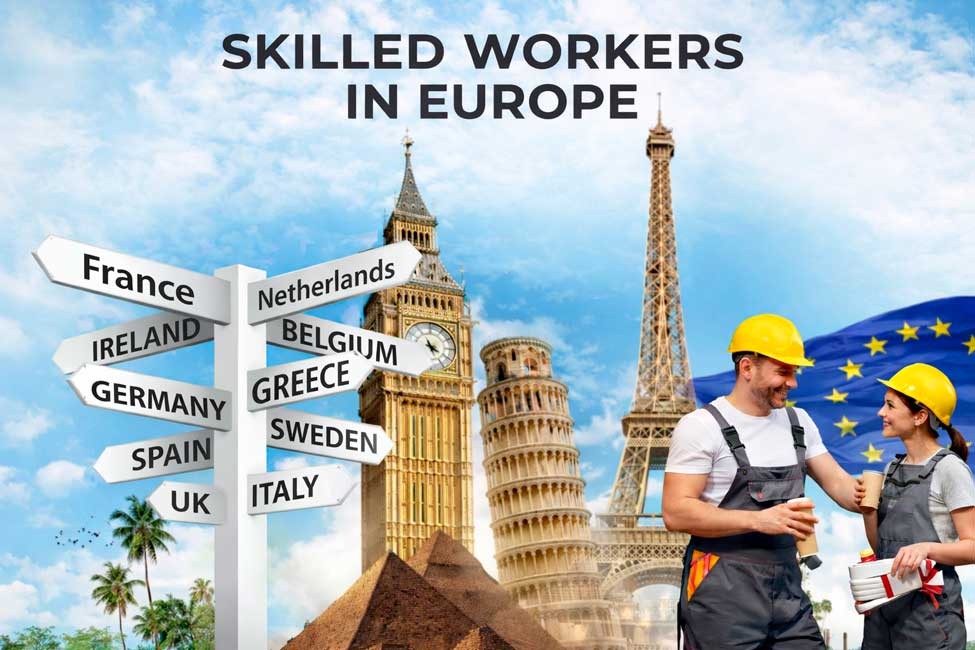
Several European countries stand out for actively promoting fast-track employment options for skilled immigrants:
- Germany, through its enhanced EU Blue Card and Skilled Workers Immigration framework.
- France, via the Talent Passport program.
- Netherlands, with its highly skilled migrant scheme for recognized sponsors.
- Ireland, offering Critical Skills Employment Permits.
- Sweden and Denmark, through expedited processing for shortage occupations.
Each country applies its own eligibility criteria and administrative procedures.
Advantages of Fast-Track Employment Pathways
Fast-track routes provide significant advantages over standard immigration processes. They reduce waiting times, improve predictability for both employers and employees, and often provide easier transitions to permanent residence. In many cases, family members benefit from simplified reunification rules and immediate access to the labor market.
For employers, these pathways help address talent shortages quickly and support long-term workforce planning.

Important Considerations for Applicants
Despite the benefits, fast-track employment paths still require careful compliance. Applicants must meet strict qualification and salary requirements, and employers often need special accreditation or sponsorship status. Language proficiency, recognition of foreign qualifications, and sector-specific licensing may also affect eligibility. Because requirements differ across countries and programs, early planning and accurate documentation are essential.
In 2026, Europe offers a growing number of fast-track employment pathways for highly skilled immigrants, reflecting the region’s ongoing demand for global talent. While these routes can significantly shorten the time required to live and work legally in the EU, success depends on choosing the right country, meeting eligibility criteria, and aligning professional qualifications with labor market needs. A targeted immigration strategy remains the most effective way to take advantage of accelerated employment opportunities in Europe.